
Posted On: March 03, 2026
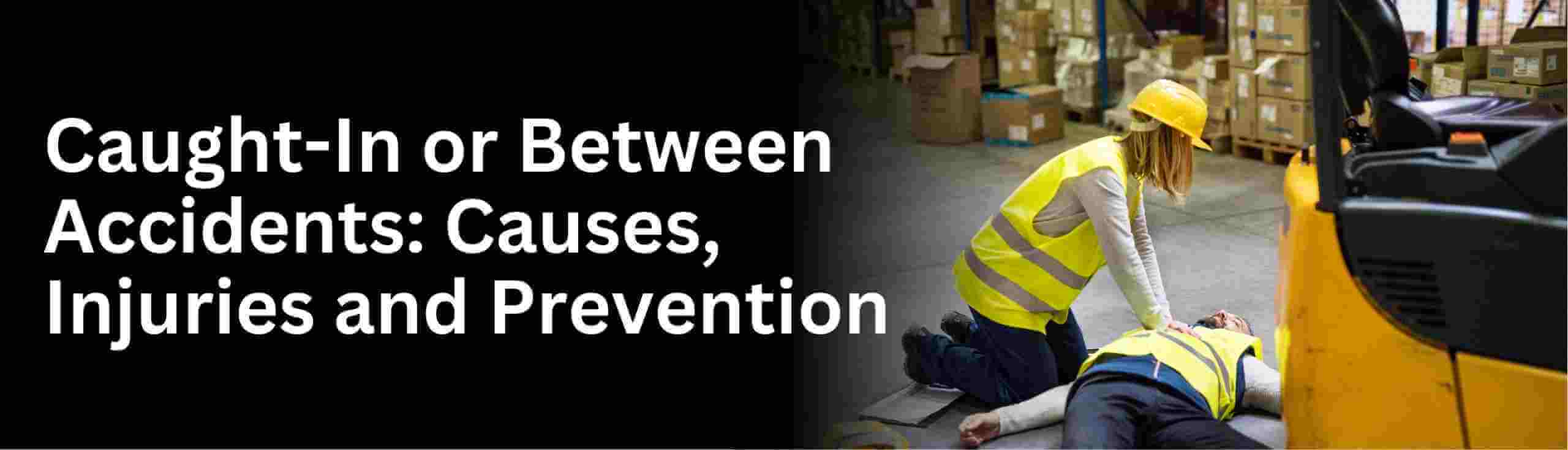
On many job sites, heavy machinery, moving equipment, and large materials are part of everyday work. While these tools keep operations running smoothly, they can also create serious safety hazards. One of the most dangerous hazards is caught-in or between accidents, where a worker is crushed, trapped, squeezed, or pinned between objects or machinery.
These incidents can result in serious injuries such as fractures, internal trauma, amputations, and fatalities. They are common in industries like construction, manufacturing, warehousing, and agriculture, where workers operate around equipment, vehicles, and unstable materials. Understanding how caught-in or between accidents happen and how the risks can be controlled plays an important role in improving workplace safety.
A caught-in or between accident happens when part of the body or the entire body becomes trapped between:
There are three main types of caught-in or between accidents:
This occurs when a worker’s hand, arm, clothing, or hair gets pulled into moving parts such as:
Without proper guards, these machines can pull a worker in within seconds.
This happens when a worker is pinned or crushed between:
These incidents usually occur when equipment operates too close to workers.
This includes situations where:
Trench collapses are especially dangerous because soil is extremely heavy. Even a small collapse can trap and suffocate a worker.
Caught-in or between accidents rarely happen without warning. In most cases, they are linked to unsafe conditions or unsafe work practices, including:
Machines without proper guards expose workers directly to moving parts such as belts, gears, and rollers. Without barriers in place, body parts can come into contact with dangerous equipment.
When machinery is not properly shut down and isolated during maintenance or cleaning, unexpected startup can trap or crush a worker.
Trenches deeper than five feet require protective systems. Without sloping, shoring, or trench boxes, trench walls can collapse and trap workers underneath heavy soil.
Improper stacking of heavy materials can cause loads to shift, fall, or slide, pinning workers against surfaces or equipment.
Forklifts, cranes, loaders, and other heavy equipment can accidentally trap workers against walls, racks, or other structures if safe distances are not maintained.
Work should be suspended during high winds, storms, or icy conditions, as weather can affect scaffold stability and worker balance.
Caught-in or between accidents can result in serious injuries, including:
Because heavy equipment, machinery, and materials are involved, these injuries are usually severe rather than minor.
OSHA requires employers to control caught-in or between hazards through the following standards:
These regulations focus on hazard recognition, equipment safety, and proper work practices to protect workers.
Preventing caught-in or between accidents requires proper planning, equipment protection, and strong worker awareness.
1. Install Proper Machine Guards:All moving parts should have guards to prevent direct contact with belts, gears, rollers, and other hazardous components.
Shut down and isolate energy sources before performing maintenance, cleaning, or repairs on machinery.
Apply sloping, shoring, or trench boxes during excavation work to protect workers from cave-ins.
Keep workers away from moving forklifts, cranes, and heavy equipment to prevent accidents.
Store materials in a stable and organized manner to prevent shifting, falling, or collapse.
Inspect equipment, trenches, and storage areas before work begins to identify hazards early.
Workers should understand pinch points, blind spots, collapse hazards, and emergency procedures.
Accidents that catch or trap workers are among the most serious hazards on a job site and can cause severe injuries if safety measures are ignored. These accidents can happen with machinery, vehicles, heavy materials, or collapsing structures. Using machine guards, following proper excavation practices, handling materials safely, and providing thorough worker training improves safety on the job.
A safe worksite depends on careful planning, hazard awareness, and good safety practices. By spotting hazards early and controlling risks, crushing and trapping accidents can be prevented.
Trusted by thousands of workers & supervisors