
Posted On: February 13, 2026
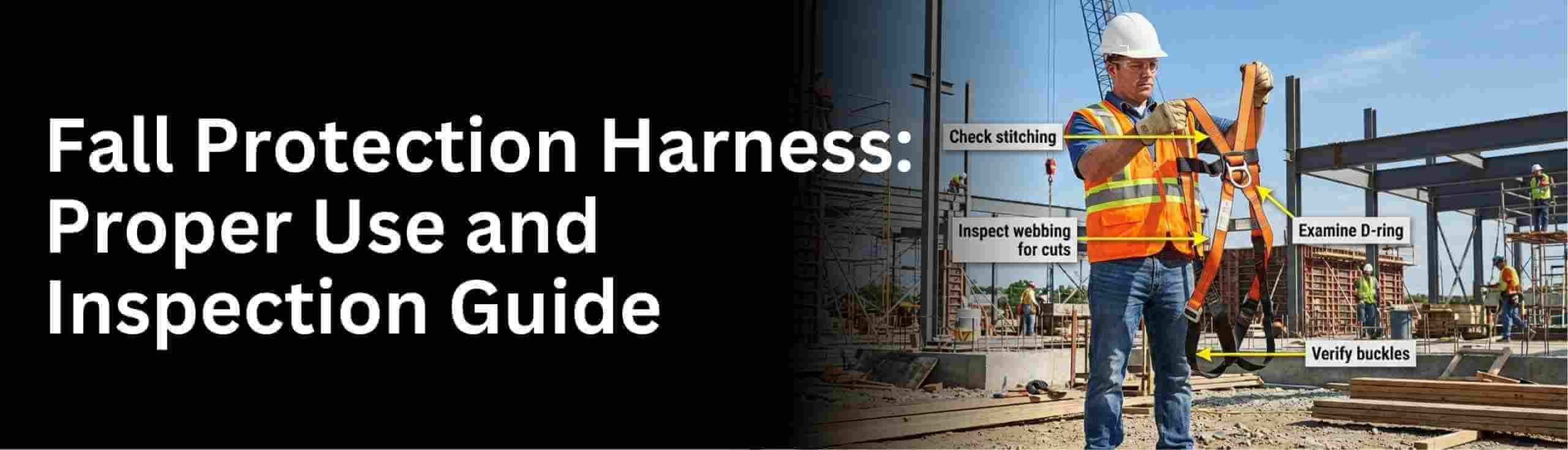
Many workers wear safety harnesses every day but still face serious fall risks. The reason is simple: a harness only protects when used properly. Incorrect fit, poor adjustment, or lack of inspection can turn safety equipment into a hazard instead of protection.
In both construction and general industry, fall protection is required when working at heights. OSHA mandates fall protection for work performed 6 feet or more above a lower level. At this height, even a small mistake can cause serious injury. A full-body harness is an important part of a Personal Fall Arrest System (PFAS), but it must be worn, inspected, and connected correctly to provide protection.
Although putting on a harness seems simple, wearing it incorrectly can be dangerous. A poorly adjusted harness may not perform properly during a fall and can lead to serious injuries. Proper use helps:
When worn correctly, a full-body harness works properly and provides real protection rather than a false sense of safety.
OSHA requires that personal fall arrest systems be inspected before each use for damage and wear. Check these important areas carefully.
Dorsal D-Ring PositionThe dorsal D-ring is the attachment point located on the back of the harness.
Correct D-ring placement maintains proper body position during a fall.
Leg Strap Adjustment:Leg straps must fit snugly.
Proper adjustment allows the harness to support the body correctly during a fall.
Overall Harness Condition:Check the harness for:
If any defect is found, remove the harness from service immediately and replace it before further use.
A complete fall protection system has three main parts. OSHA explains this using the A-B-C method.
A - AnchorA failed anchor compromises the entire system
The harness holds the body during a fall, making inspection important.
If the connector fails, the system cannot stop a fall.
If a harness has been used during a fall:
Using a harness after a fall can put lives at serious risk.
Fall protection only works when workers understand how to use it properly. OSHA Training School offers Fall Protection Awareness Training completely online, covering:
Training helps workers recognize risks and use fall protection correctly.
Fall protection only works when every part of the system is used the right way. The anchor, harness, and connector must all be strong, properly fitted, and in good condition. A single weak or damaged component can fail during a fall and lead to serious injury or death. Wearing a full-body harness correctly and checking it before each use helps keep the body positioned safely during fall arrest and lowers the risk of severe harm. Regular training and routine equipment checks help workers stay prepared and use fall protection safely on the job.
Trusted by thousands of workers & supervisors