
Posted On: January 30, 2026
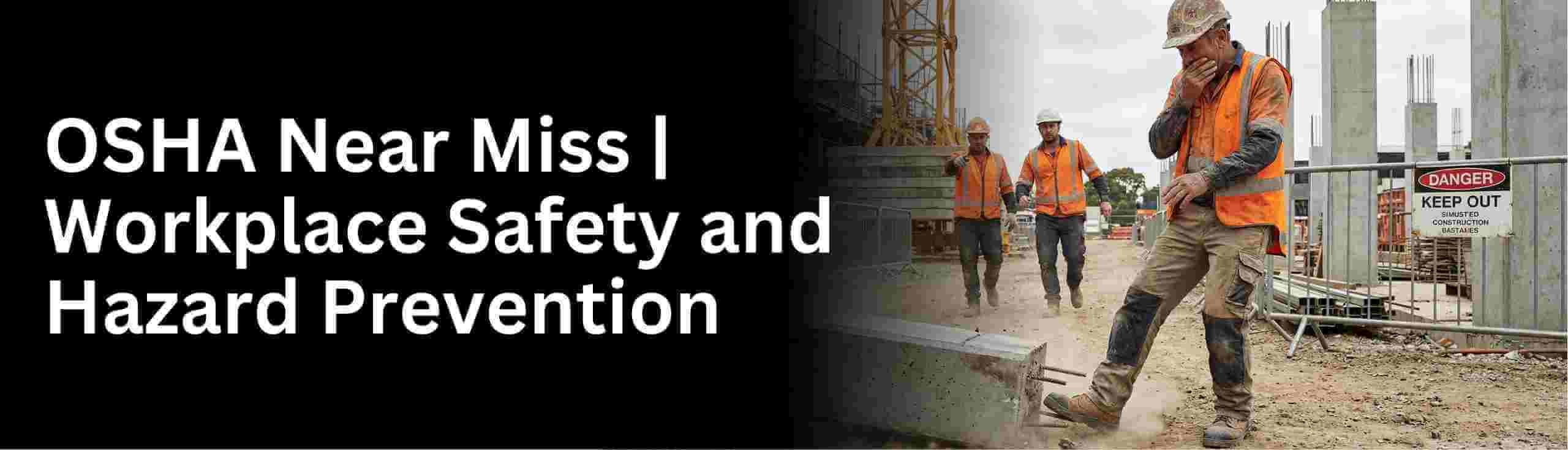
On many job sites, not every dangerous situation ends in an injury or damage. A worker may slip but catch their balance, a tool might fall and land just inches away from someone, or equipment may stop just in time. These events may be treated as “close calls,” but OSHA defines them as near misses, and they send an important safety warning.
A near miss shows that a hazard was present and could have caused serious harm if conditions were slightly different. Paying attention to these events helps workers and employers identify risks early and correct unsafe conditions before they lead to injuries, property damage, or lost work time.
OSHA defines a near miss as an unplanned event where no one is injured, no illness occurs, and no property is damaged, but a small change in timing or circumstances could have caused harm.
In simple words, a near miss is an accident that almost happens. Nothing went wrong this time, but the risk was clearly present.
Example: A worker slips on a wet floor but catches themselves before falling. No one is hurt, yet the hazard is still there and could cause injury if it is not corrected.
Near misses act as warnings. They show that something on the job site is unsafe, even if no one is injured. Paying attention to these events helps prevent accidents before they occur.
Revealing Hidden Hazards:A near miss can uncover problems that could lead to accidents, such as:
Correcting hazards after a near miss can prevent injuries and property damage. Waiting until someone is hurt often results in higher costs and more serious outcomes. Immediate action keeps the workplace safer.
Creating a Safer Work Environment:Reporting near misses shows that safety is valued over blame. Open communication improves awareness, increases understanding of hazards, and helps maintain safer work practices.
Near misses can occur in any industry and at any time. Examples include:
In each case, the situation ends safely, but only by chance. These events provide important insight into potential hazards.
OSHA does not require near misses to be formally recorded like injuries or illnesses. However, tracking and reviewing near misses is highly recommended as part of an effective safety and health program.
A simple near miss report may include:Reviewing these reports helps identify common issues, reduce hazards, and improve overall workplace safety.
A near miss only has meaning when it leads to action. After a near miss:
Following these steps turns a close call into a learning opportunity and improves workplace safety.
Near misses are not just minor incidents, they are early warnings of hazards that could lead to accidents if ignored. OSHA recognizes near misses as important indicators of unsafe conditions that need attention. By identifying, reporting, and taking action on near misses, workplaces can reduce risks before they result in injury or damage. This helps make job sites safer, keeps workers protected, and maintains focus on safety every day.
Trusted by thousands of workers & supervisors