
Posted On: August 21, 2026
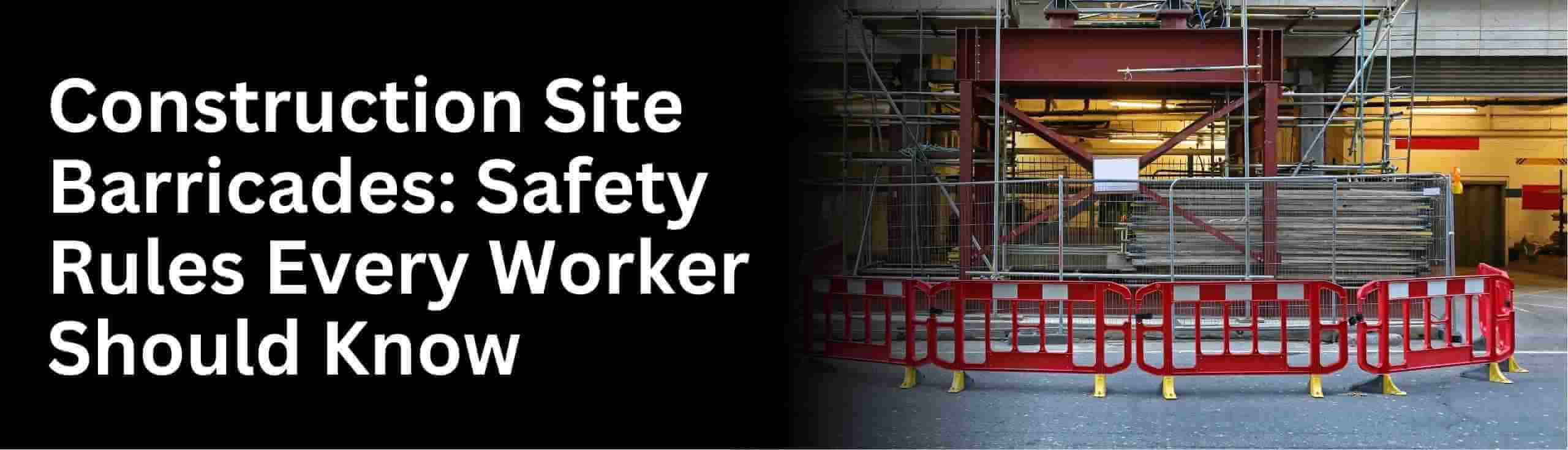
A barricade is easy to ignore. It is just a tape or a cone or a fence. It does not make noise. It does not shut down equipment. It does not send alerts to anyone's phone.
But it marks the difference between a controlled space and an uncontrolled one. And on an active construction site, that difference is sometimes the difference between a worker going home and a worker going to the hospital.
Barricades on a job site serve an important function. They tell people where they cannot go and why. They create a physical and visual boundary around hazards such as excavations, overhead work zones, electrical equipment, unstable structures, chemical storage areas, and equipment operating zones. They communicate that boundary to every worker, visitor, and contractor on the site without requiring a conversation.
OSHA includes requirements for barricades and barriers under 29 CFR 1926.502 for fall protection, 29 CFR 1926.200 for signs and signals, and throughout the construction standards wherever hazard zones are created by specific work activities. The main idea is the same. If a hazard exists and a worker could reasonably enter the area without knowing it, something physical must be in place to help prevent that from happening.
Any excavation or trench on a construction site creates a fall hazard that requires protection. Barricades, guardrails, or fencing should be placed around excavations where workers or equipment could fall into them. The barricade should be visible, stable, and positioned at a safe distance from the edge to help protect workers if the soil shifts or collapses.
Any time work is happening above ground level, such as framing, roofing, scaffold work, or crane picks, the area below becomes a struck by hazard zone. Tools, materials, and debris can fall. Workers below may not see them coming. Barricading the drop zone beneath elevated work is one of the simplest ways to help prevent struck by incidents on construction sites.
Temporary electrical panels, energized equipment, and work near power lines require barricades that keep unauthorized workers at a safe distance. Barricades near electrical hazards must communicate clearly that the zone is restricted and that the hazard is energized.
Heavy equipment operating areas must be barricaded or controlled to prevent pedestrian workers from entering the swing radius of an excavator, the reversing path of a dump truck, or the travel lane of a wheel loader. Physical barriers combined with a trained spotter and clear site traffic management can help reduce struck by incidents involving construction equipment.
Areas where hazardous materials are stored or where spills have occurred need to be barricaded to restrict access until the hazard has been properly controlled. Unauthorized entry into these areas exposes workers to chemical burns, respiratory hazards, and fire or explosion risks.
A barricade that people do not follow or understand provides little protection. An effective barricade should be clearly visible, properly placed, and communicate the hazard to workers.
Barricades should be placed before workers reach the hazard, not after someone has already approached it. They should remain visible under the lighting conditions of the work area. They should communicate not only that an area is restricted, but also why it is restricted and what hazard is behind the barrier.
Warning tape alone may not provide enough protection for serious fall hazards, open excavations, or equipment operating zones. In these situations, physical barriers that workers cannot easily step over may be required.
When barricades are removed, changed, or knocked down during the workday, someone on site should be responsible for putting them back or repairing them immediately. This helps keep the hazard area clearly marked and prevents workers from accidentally entering it.
Barricades help keep workers away from hazardous areas and make restricted zones easy to identify. Proper placement, clear visibility, and regular maintenance can help reduce the risk of falls, struck by incidents, and other construction site injuries. Workers should always respect barricades and follow site safety procedures when working near hazardous areas with the right OSHA training.
Trusted by thousands of workers & supervisors