
Posted On: August 25, 2026
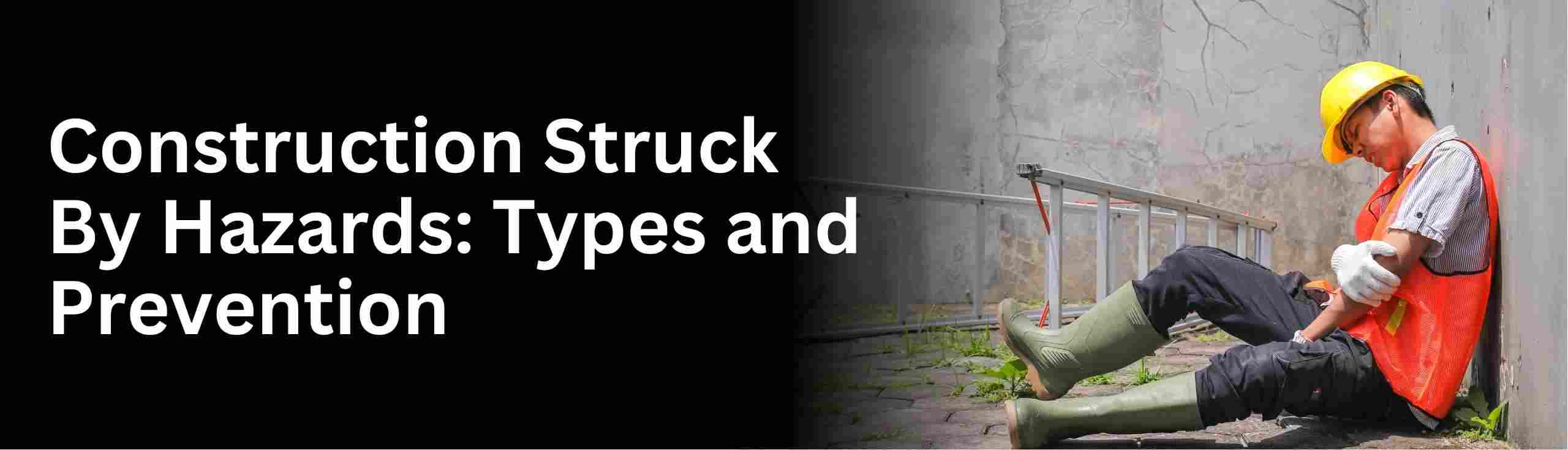
OSHA calls them the Fatal Four. These are the four leading causes of death that account for more than half of all construction fatalities in the United States each year.
Falls. Electrocutions. Caught-in or caught-between incidents. And struck-by incidents.
Struck-by incidents are second on that list. Unlike some hazards that affect only certain trades or work activities, struck-by incidents can occur on any construction site, in any state, and to workers at any experience level. A flying nail from a pneumatic nail gun. A falling wrench from a scaffold above. A reversing dump truck whose operator never saw the worker behind it. A concrete block loosened by wind and falling three stories.
Struck-by incidents can occur suddenly and without warning. A worker may be performing a routine task when a falling object, moving vehicle, flying material, or swinging piece of equipment enters their path. These incidents can result in serious injuries or fatalities, which is why workers should remain aware of their surroundings and follow site safety procedures at all times.
OSHA identifies four specific categories of struck by hazards in construction. Understanding each one can help workers identify hazards and make safer decisions on the job site.
Power tools, nail guns, grinders, and saws can create flying debris during normal operation. Examples include a blade fragment from a grinding wheel, a nail that ricochets off a hard surface, or concrete chips from a chipping hammer. Eye injuries and facial injuries caused by flying objects are among the most common tool related injuries in construction. Safety glasses and face shields help protect workers from these hazards.
Tools and materials dropped from elevated work areas can become serious hazards. A wrench dropped from a scaffold, a piece of lumber falling from a roof, or materials slipping from a lift can strike workers below. Toeboards, tool lanyards, debris nets, and hard hats help reduce the risk of injuries caused by falling objects.
Crane operations, hoists, and material deliveries can create hazards when loads swing or shift unexpectedly. A load that appears stable may move if the weight is unevenly distributed. During lifting operations, workers should stay clear of the load path and the equipment's swing radius. Even a small movement can place workers at risk of being struck.
Reversing vehicles are involved in many struck by incidents on construction sites. Dump trucks, excavators, wheel loaders, and concrete trucks can create blind spot hazards when operating near workers on foot. Workers should never assume that an equipment operator can see them.
The rule is simple. Never position yourself behind a vehicle that could reverse. Never enter an equipment swing radius without confirming that the operator is aware of your presence. Maintaining visibility, communication, and awareness around moving equipment can help reduce the risk of struck by incidents.
Every superintendent and foreman running an active construction site should confirm these things before workers begin:
Hard hats are worn in all areas where overhead work is in progress or where equipment is operating. Safety glasses are worn by everyone in areas where power tools, nail guns, or cutting equipment are in use. All lifting operations have a designated lift supervisor and all workers in the area know where they are permitted to stand. All vehicles and mobile equipment have a designated travel path and workers on foot know which areas are restricted during equipment operation.
These are not complicated steps. They are the difference between a site that runs safely and a site that eventually makes a phone call nobody wants to receive.
OSHA 10 Hour Construction covers all four categories of struck-by hazards as part of the core curriculum. Workers learn how to recognize struck-by risk in their specific work environment, what personal protective equipment is required, and what their rights are when they believe a hazard has not been properly controlled.
OSHA 30 Hour Construction gives supervisors and safety managers a complete understanding of struck by hazard prevention programs, site traffic management, lifting operation safety planning, and ways to improve safety practices on the job site so every worker understands that struck by incidents can be prevented.
Both courses are available fully online through OSHA Training School in English and Spanish. The courses are accessible on any device and can be completed at your own pace. Upon completion, you will receive the OSHA DOL card, which is accepted on construction job sites across the United States.
Every construction site has the potential for struck by hazards, but many incidents can be prevented when workers know what to look for and how to respond. Staying clear of moving equipment, falling objects, swinging loads, and other danger areas, along with following site safety procedures, can help reduce the risk of serious injuries. Proper OSHA training gives workers and supervisors the knowledge they need to recognize these hazards and make safer decisions throughout the workday.
Trusted by thousands of workers & supervisors