
Posted On: July 31, 2026
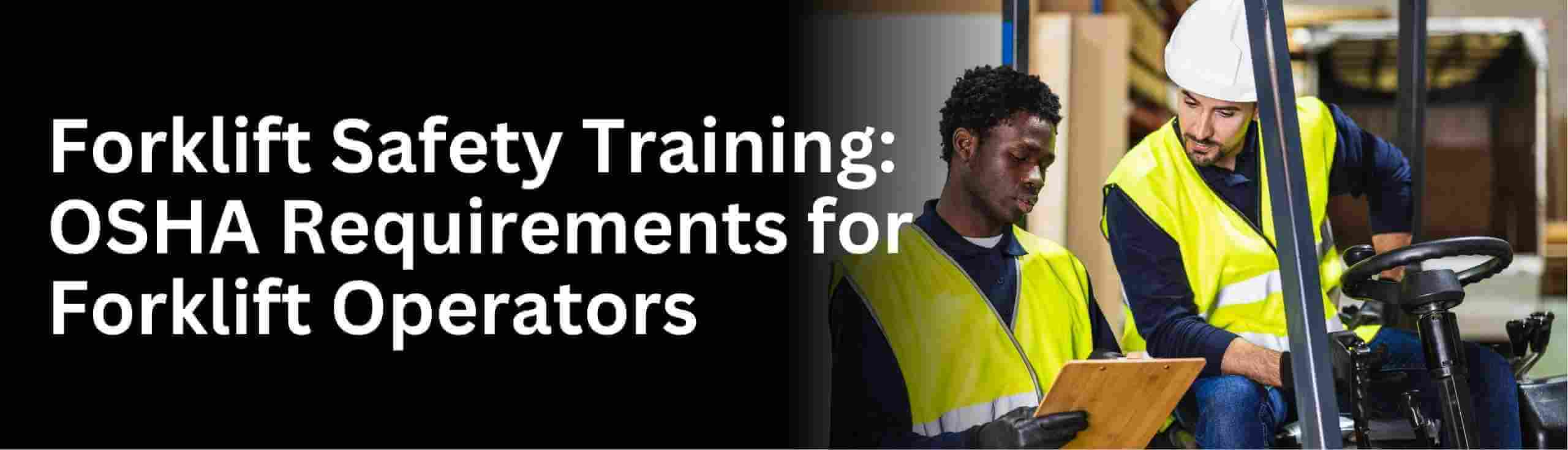
Every year, forklifts kill approximately 85 workers and seriously injure nearly 35,000 more in the United States. That makes powered industrial trucks one of the most dangerous pieces of equipment in any warehouse, distribution center, or manufacturing facility.
Yet in workplaces across the country, operators use forklifts every day without formal safety training. Some learned from a coworker. Some taught themselves. And some have been doing the job for years without an incident, until the day something goes wrong.
OSHA does not leave forklift safety to chance.OSHA's Powered Industrial Truck standard under 29 CFR 1910.178 requires every forklift operator to be trained and evaluated before operating a forklift on their own. This is a federal requirement for employers whose workers operate powered industrial trucks.
Operators must receive training on forklift safety, hands-on training with the equipment they will use, and an evaluation by an experienced trainer. Refresher training is required every three years or sooner if unsafe operation is observed, an accident or near-miss occurs, or the operator is assigned to a different type of truck.
Employers who allow untrained operators to use forklifts may face OSHA violations and fines. More importantly, proper training can help reduce the risk of serious injuries and fatalities in the workplace.
Powered Industrial Truck (PIT) training goes far beyond learning how to drive a forklift. It covers what operators need to know to work safely from the time they begin using the equipment until they shut it down at the end of the shift.
Forklifts come in seven different OSHA classes. Operators learn the differences between sit-down counterbalanced trucks, reach trucks, order pickers, pallet jacks, and other powered industrial trucks. Understanding the type of truck being operated is an important part of safe operation.
Before starting a shift, operators must perform a pre-operation inspection. Training covers what to check, what warning signs to look for, and what to do if a problem is found. Skipping this step can allow equipment problems to go unnoticed and increase the risk of an accident.
Training covers how to monitor a forklift during operation, identify equipment problems, and follow proper reporting procedures so repairs can be made before a problem becomes more serious.
Improper fueling and battery charging are often-overlooked hazards in forklift operations. Training covers safe fueling procedures for propane and diesel forklifts and proper battery charging practices for electric forklifts, including airflow requirements and personal protective equipment.
This is an important part of PIT safety training. Operators learn how tip-overs occur and how to prevent them, how to manage speed and load stability, worker safety around forklifts, safe travel practices, and what to do when unexpected situations arise.
Improper load handling can lead to tip-overs, dropped loads, and injuries caused by falling or moving materials. Training covers load capacity limits, center of gravity, proper fork positioning, safe stacking heights, and how to handle unusual or unstable loads.
Loading docks are among the most dangerous areas in any warehouse. Training covers dock plate and dock board safety, making sure trailers are secure before entry, proper spotting procedures, and the risks of operating a forklift on an unsecured trailer.
Any worker who operates a powered industrial truck needs PIT training before operating equipment on their own. This includes forklift operators, reach truck operators, order picker operators, and pallet jack operators working in warehouses, manufacturing plants, distribution centers, and other general industry workplaces.
Supervisors and safety managers responsible for forklift operations should also understand PIT safety requirements. This knowledge helps them evaluate operators, manage a forklift safety program that meets OSHA requirements, and respond properly when accidents or near-misses occur.
Yes. Powered Industrial Truck training is available fully online through OSHA Training School in English and Spanish. The self-paced course can be completed on any phone, tablet, or laptop, allowing workers to train on their own schedule.
Upon completion, workers receive a Certificate of Completion for employer records. Group pricing is available for employers training 10 or more workers.
OSHA Training School offers Powered Industrial Truck (PIT) training online in both English and Spanish. The self-paced course allows workers and supervisors to complete the training on their own schedule using a phone, tablet, or laptop. The training covers forklift safety requirements, inspections, load handling, fueling and charging procedures, loading dock safety, and accident prevention. By providing employees with this training, employers can help create a safer workplace and reduce the risk of forklift-related accidents and injuries.
Trusted by thousands of workers & supervisors