
Posted On: July 14, 2026
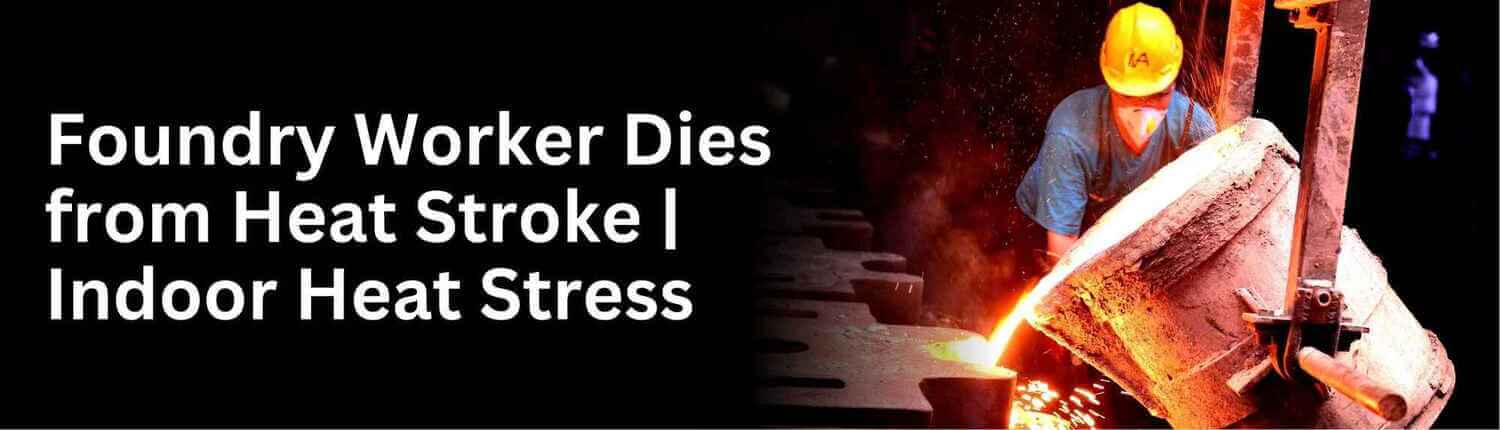
When most people think about heat-related illness at work, they picture construction workers, roofers, or road crews working under the summer sun. However, dangerous heat exposure can occur inside workplaces as well. According to OSHA, heat remains one of the leading weather-related causes of worker fatalities in the United States. While outdoor workers usually receive the most attention, indoor workers exposed to ovens, furnaces, molten metal, and other heat-generating equipment face many of the same dangers.
A workplace fatality involving a foundry worker serves as a powerful reminder that heat stress can be deadly anywhere. This incident highlights the importance of recognizing indoor heat hazards and taking steps to protect workers before a heat-related illness occurs.
A 35-year-old employee had worked at a foundry for six years. His regular duties were performed in a cooler section of the facility. On the day of the incident, he was assigned to work near an industrial oven where temperatures were much higher than where he normally worked.
The foundry already contained substantial heat from ovens and molten metal. To protect himself from burns, the worker wore heavy protective clothing. While this equipment protected him from thermal hazards, it also reduced his body's ability to release heat.
After several hours of working in the hotter environment, the employee collapsed and died from heat stroke.
This worker had six years of experience in the facility, yet a single shift in a hotter work area became fatal. Experience alone does not protect workers from heat stress when conditions change.
Multiple workplace conditions contributed to this incident.
The worker was exposed to heat generated by industrial ovens and molten metal while wearing protective clothing that trapped body heat. He was also assigned to a work area that was much hotter than his normal workstation.
These conditions increased the strain on his body's cooling system. As his body temperature continued to rise, it eventually reached a point where it could no longer cool itself effectively.
This case highlights an important lesson for employers: heat-related illnesses can occur indoors. Manufacturing facilities, foundries, warehouses, commercial kitchens, and other workplaces with heat-producing equipment can expose workers to dangerous levels of heat stress.
Heat stroke is the most serious heat-related illness and requires immediate medical attention. Without rapid treatment, it can lead to permanent injury or death.
Common warning signs include confusion or unusual behavior, severe headache, dizziness, rapid heartbeat, hot skin, loss of coordination, fainting, and loss of consciousness.
If a worker displays any of these symptoms, call emergency medical services immediately and take steps to lower the worker's body temperature while waiting for help to arrive.
Every minute matters during a heat stroke emergency.Protective equipment is required in many industrial workplaces, but it can also increase heat stress risk.
Heavy clothing, flame-resistant garments, and specialized PPE may trap heat and reduce the body's ability to cool itself through sweating. As a result, workers can become overheated even when air temperature readings do not appear extremely high.
Environmental temperature alone does not determine heat stress risk. Employers should also consider the type of clothing being worn, the physical demands of the job, humidity levels, exposure duration, and worker acclimatization.
A worker wearing heavy protective equipment may face a much higher heat burden than temperature measurements suggest.
One of the most important lessons from this incident is that workers may be at greater risk when they are reassigned to hotter work areas.
The employee spent years working in a cooler part of the facility. Moving to a hotter environment exposed him to conditions his body was not accustomed to handling for extended periods.
Employers should pay special attention when workers move to hotter work locations, return after time away from work, begin new job assignments, work overtime or extended shifts, or wear additional protective equipment.
Additional breaks, increased hydration, and closer supervision are necessary during these transitions.
The risks associated with heat exposure become even greater when workers are unaware of the warning signs or do not know how to respond when symptoms appear. This is why heat stress training plays an important role in workplace safety.
Many heat-related illnesses and fatalities can be prevented. The key is helping workers and supervisors identify hazards before they develop into emergencies
Effective heat stress training teaches employees how to identify early warning signs and respond correctly when symptoms appear.
Topics covered include the causes of heat-related illnesses, the signs and symptoms of heat exhaustion and heat stroke, proper hydration practices, work-rest schedules, acclimatization procedures, the effects of protective clothing on body temperature, and emergency response procedures.
When workers understand the risks, they are more likely to report symptoms early and seek assistance before a situation becomes life-threatening.
Heat stress can affect workers in construction, manufacturing, warehousing, foundries, and many other industries. As a result, more employers are adding heat stress awareness training to their workplace safety programs.
Heat stress training is available fully online through OSHA Training School. The course is self-paced and can be completed on a phone, tablet, or computer, allowing workers to train without missing a shift or being pulled away from their job duties.
Employers should not wait until a worker collapses before addressing heat hazards.
A proactive heat illness prevention program should include heat hazard assessments, access to drinking water, scheduled rest breaks, worker acclimatization procedures, supervisor monitoring, emergency response planning, and heat stress training for workers and supervisors.
The death of this foundry worker is a powerful reminder that heat hazards are not limited to outdoor job sites. Indoor heat sources, protective clothing, and changes in work assignments can create dangerous conditions that lead to heat stroke.
Every worker deserves a safe workplace. By identifying heat hazards, implementing preventive measures, and providing heat stress training, employers can help protect workers from preventable injuries and fatalities.
A few hours of training and preparation can make the difference between a normal workday and a tragic loss.
Trusted by thousands of workers & supervisors