
Posted On: August 18, 2026
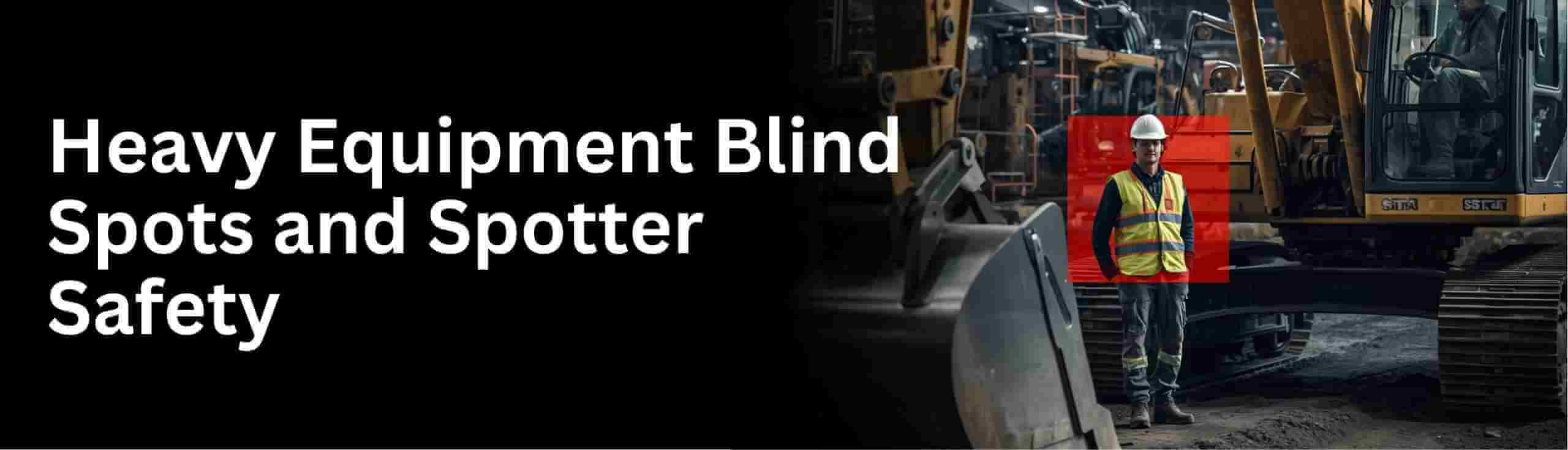
You cannot see what the operator cannot see. That is the challenge workers face around heavy equipment every day.
A dump truck backing up may have a large area behind it that is not visible to the driver. An excavator operator may not be able to see workers positioned beside the machine while it rotates. A wheel loader operator carrying a raised bucket may have limited visibility directly in front of the equipment. Even experienced operators have blind spots that cannot be eliminated through experience alone.
These limitations exist on every construction site. Understanding where blind spots are located and how spotters help manage them is an important part of preventing struck-by incidents involving heavy equipment.
A blind spot is any area around a piece of equipment that the operator cannot see through direct line of sight or with available mirrors and visibility aids. Every machine has blind spots, and those blind spots vary depending on the type of equipment, the attachments being used, and the machine's position.
A worker standing close to a machine may believe they are clearly visible. However, the operator may not be able to see them at all.
For this reason, workers should never assume that an equipment operator knows where they are. Maintaining visibility and communication around operating equipment is an important part of job site safety.
A spotter is a trained worker assigned to help an equipment operator move safely when visibility is limited. The spotter watches the surrounding area, monitors hazards, and communicates with the operator during equipment movement.
Before work begins, the operator and spotter should review the planned movement, identify areas with limited visibility, and confirm the communication methods that will be used. Hand signals, radios, or other site-approved communication methods should be clearly understood before equipment starts moving.
While performing spotting duties, the spotter should focus entirely on the movement being directed. Distractions can interfere with communication and increase the risk of an incident.
If communication is lost or a signal is unclear, equipment movement should stop until communication is reestablished.
Workers should stay clear of equipment travel paths, swing radii, and other areas where heavy equipment operates. Entering these areas without communicating with the operator can expose workers to serious hazards.
Before approaching operating equipment, workers should make sure that the operator is aware of their presence. Eye contact, hand signals, or other approved communication methods can help confirm that the operator has seen them.
Workers should also remember that backup alarms are only one layer of protection. Noise from construction activities can make alarms difficult to hear, especially on busy job sites. Maintaining awareness of equipment movement and following site procedures remain important safety practices.
Many blind spot incidents occur because one person assumes the other is aware of the situation.
The operator may believe the area is clear. A worker on the ground may believe the operator can see them. When either assumption is incorrect, the result can be a serious injury.
Clear communication helps eliminate uncertainty. Workers, spotters, and equipment operators should understand their responsibilities and maintain communication whenever equipment is moving or operating near workers on foot.
OSHA requires workers assigned to spotting duties to receive training before performing those responsibilities. Spotter training should cover equipment blind spots, communication methods, workplace hazards, and the procedures used when communication is interrupted.
Additional requirements may apply when spotting operations take place near energized power lines or other high-hazard conditions.
Employers are responsible for providing workers with the information and training needed to perform their duties safely.
OSHA 10 Hour Construction training helps workers learn about common construction hazards, including struck-by incidents involving heavy equipment. Workers can learn how blind spots develop, why spotters are used, and how communication helps reduce risk on active job sites.
OSHA 30 Hour Construction training provides additional safety information for workers with greater safety responsibilities. Topics include work zone safety measures, hazard recognition, and methods for reducing struck-by hazards across a project.
OSHA Training School offers OSHA 10 and OSHA 30 training for construction online in English and Spanish. The courses are self-paced and can be completed from a phone, tablet, or laptop.
Heavy equipment is a part of daily operations on many construction sites, but every movement should be approached with caution. Before equipment begins moving, workers should understand where blind spots exist, follow site communication procedures, and stay clear of equipment travel paths whenever possible.
Many blind spot incidents can be prevented when workers remain alert, communicate effectively, and follow site procedures. Understanding blind spots and the role of a spotter can help reduce struck-by hazards and improve safety for everyone on the job site with proper OSHA training.
Trusted by thousands of workers & supervisors