
Posted On: October 23, 2026
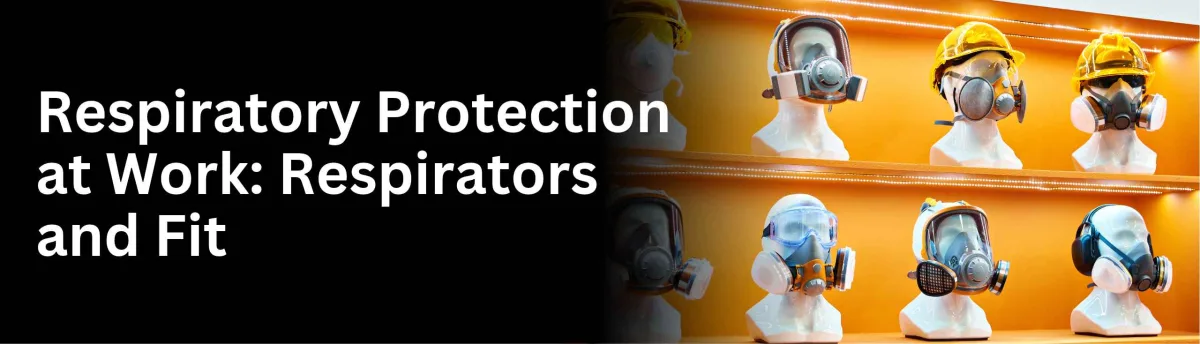
A worker puts on a respirator, pulls the straps tight, and goes back to work feeling protected.
But is the respirator actually protecting them?
Wearing a respirator is only part of respiratory protection. It must be the correct type for the hazard, fit the worker properly, and be maintained according to the manufacturer's instructions.
A respirator that does not seal against the face or cannot protect against the substance in the air may give workers a false sense of safety.
Workers can breathe in harmful substances they cannot always see or smell. These may include:
Exposure to these substances can cause serious health problems, including silicosis, asthma, chronic lung disease, and certain types of cancer. Some health effects develop over time, so workers may not notice the damage until their health has already been affected.
Respirators fall into two main groups. Each type is designed for different working conditions.
Air-purifying respirators remove harmful particles, gases, or vapors from the air through filters or cartridges. Examples include N95 filtering facepiece respirators, half-mask respirators, full-face respirators, and powered air-purifying respirators.
These respirators do not supply oxygen. They must not be used in oxygen-deficient or otherwise unsuitable atmospheres.
These respirators provide clean breathing air from a separate source. Examples include supplied-air respirators and self-contained breathing apparatus (SCBA).
They are used in conditions where air-purifying respirators cannot provide the required protection, including oxygen-deficient atmospheres and certain immediately dangerous to life or health (IDLH) conditions.
It is also important to understand the difference between an ordinary dust mask and a respirator. An N95 is a NIOSH-approved filtering facepiece respirator. A simple nuisance dust mask without NIOSH approval does not provide the same protection.
A tight-fitting respirator works only when it seals properly against the worker's face. If air leaks around the edges, harmful substances can enter the respirator without passing through the filter.
Before workers use a respirator, their employer must arrange a medical evaluation to check if they can safely wear it. Workers who use tight-fitting respirators must also pass a fit test before using one for the first time, when they switch to a different facepiece, and at least once a year.
A fit test checks whether a specific respirator fits the worker's face and creates a proper seal.
Workers must also check the seal every time they put on a tight-fitting respirator. This quick check helps them find leaks before entering the work area. It is different from a fit test.
Facial hair can prevent a respirator from sealing properly. Hair should not be between the respirator's sealing surface and the worker's face. If facial hair prevents a proper seal, the worker may need a different type of respirator.
OSHA's Respiratory Protection standard, 29 CFR 1910.134, requires employers to have a written respiratory protection program whenever workers need to use respirators at work.
The program must cover:
Employers must also have a schedule for replacing gas and vapor cartridges based on workplace conditions and how the respirators are used. Particulate filters must be replaced according to the respiratory protection program and the manufacturer's instructions.
Employers should also try to reduce harmful substances in the air before relying on respirators. For example, they can use ventilation, wet cutting, or enclosed work areas to reduce the amount of dust, fumes, and other substances workers breathe in.
Personal Protective Equipment (PPE) training helps workers understand the purpose and limitations of respiratory protection. It can cover respirator selection, proper use, inspection, cleaning, storage, and filter replacement.
Workers also need training specific to the respirators they use and the employer's respiratory protection program.
OSHA 10 and OSHA 30 training for construction and general industry introduce workers to workplace hazards and the role of personal protective equipment. These courses help workers understand when respiratory protection may be needed, but they do not replace respirator-specific training, fit testing, medical evaluations, or an employer's written respiratory protection program.
OSHA Training School offers online OSHA 10 and OSHA 30 courses in English and Spanish. Courses are self-paced and accessible on different devices. Group pricing is available for employers training ten or more workers.
The right respirator, a proper fit, and regular maintenance all play a role in protecting workers from harmful airborne substances. Workers need to understand what their respirator can protect against and when it should not be used. A respirator is only useful when it is selected, fitted, and used correctly.
Trusted by thousands of workers & supervisors