
Posted On: October 16, 2026
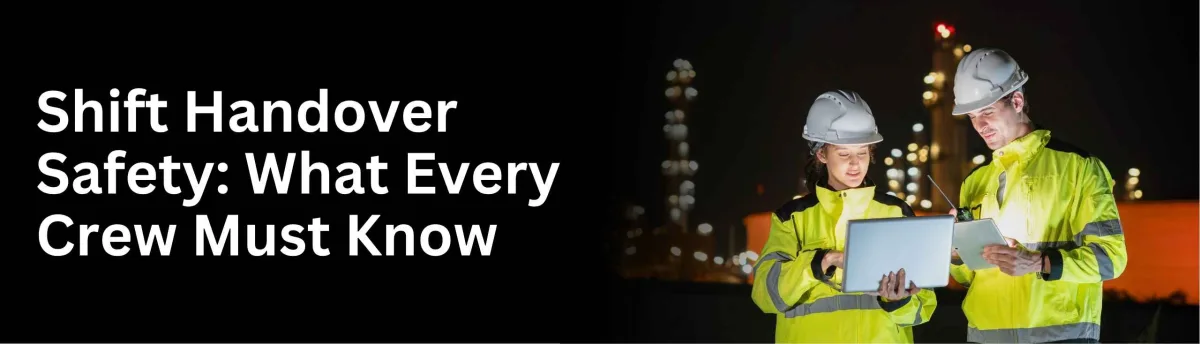
A crew finishes its shift and prepares to leave the jobsite. Another crew arrives, ready to continue the work.
The incoming workers know what needs to be done, but they may not know that a machine has been acting unusually, a section of the work area has been closed, or a temporary repair was made earlier in the day.
The previous crew knows about these issues. The new crew does not.
Work resumes, and a problem that could have been prevented becomes an unexpected danger.
This is why shift handovers matter. When workers change shifts, important safety information must move with them.
A shift handover is more than telling the next crew which tasks remain unfinished. It is also an opportunity to explain what has changed and what workers need to know before continuing the job.
Depending on the work, this may include:If this information is missing, incoming workers may make decisions without knowing the full situation.
Consider a maintenance team working on a conveyor.
During the shift, a worker identifies a problem and the conveyor is taken out of service. The repair is not finished before the shift ends.
If the incoming team does not receive clear information about the equipment's status, someone may assume the conveyor is ready to use.
The result could be unexpected equipment operation or exposure to hazardous energy.
A clear handover should explain what work has been completed, what remains unfinished, which controls are in place, and who is responsible for the next steps. Equipment must still be handled according to the site's energy-control procedures before maintenance continues or it is returned to service.
A quick conversation can be helpful, but details can be forgotten or misunderstood, especially when a workplace is noisy or several tasks are happening at once.
Written handover notes, equipment status labels, work permits, and maintenance records can help workers confirm the information they receive.
The method will depend on the workplace and the type of work being performed. The important point is that safety-related information must reach the people who need it.
Workers should ask questions if instructions are unclear rather than assuming they understand the situation.
Outgoing workers should communicate unfinished tasks, unusual conditions, equipment problems, and any safety controls that remain in place.
Incoming workers should review the information, check the work area, and confirm the status of equipment before beginning their tasks.
Supervisors can help by setting clear handover procedures and giving crews enough time to exchange important information.
When contractors or multiple teams share a work area, communication becomes even more important because one crew's work can affect another crew's safety.
A new shift does not mean the workplace has returned to normal.
Equipment may still be isolated. Repairs may remain unfinished. Work areas may have changed, and conditions that were safe earlier may need to be checked again.
Before continuing a task, workers should understand the current work status, review the relevant procedures, and confirm that required precautions are in place.
A good shift handover helps workers start with the information they need instead of discovering a problem after work has already begun.
The shift may change, but responsibility for workplace safety continues.
Trusted by thousands of workers & supervisors