
Posted On: August 28, 2026
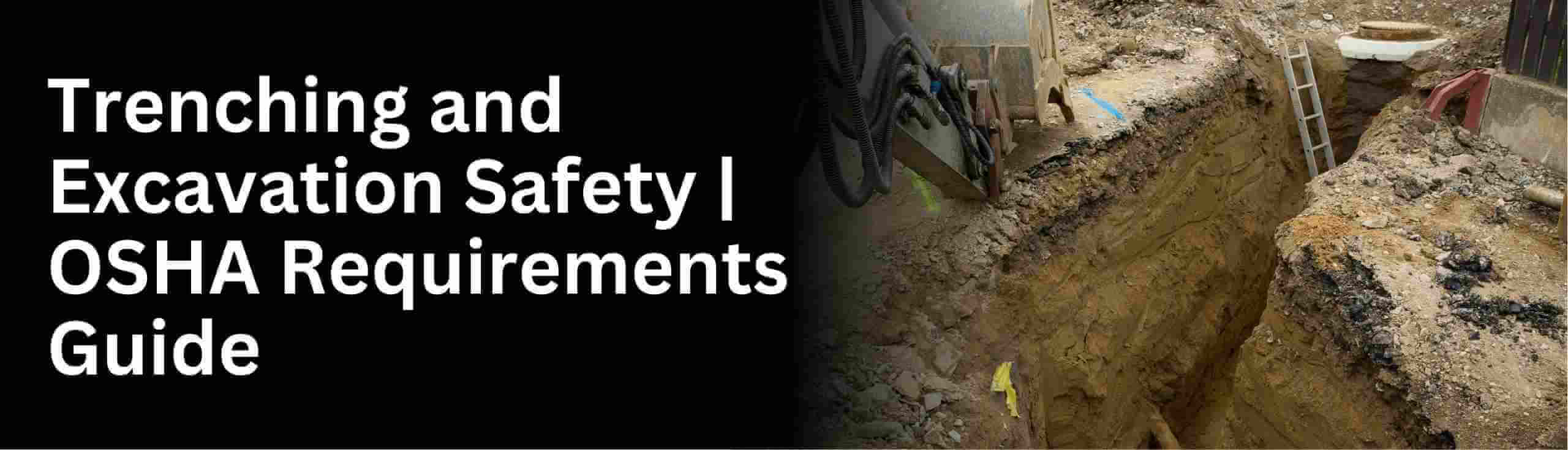
Soil looks stable. That is the problem.
A trench wall can appear perfectly solid right up until the moment it collapses. There is no cracking sound. No warning. No second chance. When a trench fails, it can happen in seconds. Five feet of soil weighing approximately 100 pounds per cubic foot can pin a worker in seconds, creating enough pressure to trap the worker and make escape extremely difficult.
OSHA considers trenching and excavation among the most hazardous operations in construction. Cave ins continue to result in serious injuries and fatalities among construction workers each year, especially when safety precautions are overlooked because the ground appears stable.
The ground may look safe, but its appearance alone does not mean a trench is safe to enter.Trenches can expose workers to several hazards that may result in serious injuries or fatalities.
Atmospheric hazards such as oxygen deficiency, toxic gases, and combustible gases can accumulate in trenches because they are below ground level. A worker who enters an unventilated trench may lose consciousness before recognizing the danger.
Flooding from rain, nearby water sources, or ruptured water mains can fill a trench within minutes. Workers at the bottom may have very little time to react when water enters the trench rapidly.
Underground utilities, including gas lines, electrical conduit, water mains, and sewer lines, run through the same ground being excavated. Striking a buried gas line or energized electrical conduit with a backhoe or hand tool can create immediate life threatening hazards for workers in the area.
Cave ins caused by unstable soil, vibration from nearby equipment, loads placed near the trench edge, or changes in soil conditions can occur without visible warning. Cave ins are among the leading causes of serious injuries and fatalities in trenching operations, which is why OSHA requires protective systems to help protect workers.
OSHA's Excavation Standard under 29 CFR 1926 Subpart P is one of the most detailed safety standards in construction. It outlines responsibilities for employers, competent persons, and workers before anyone enters an excavation.
Before any worker enters a trench, a competent person must classify the soil type, identify the required protective system, inspect the trench for signs of a cave in, water accumulation, and atmospheric hazards, and confirm that the necessary protections are in place.
There are three main protective systems OSHA recognizes for trench safety:
Sloping involves cutting the trench walls back at an angle based on the soil classification to help reduce the risk of a cave in.
Shoring uses timber, hydraulic, or pneumatic systems to support the trench walls and help prevent soil movement.
Trench boxes and shields are prefabricated steel structures placed inside the trench to help protect workers if a wall collapse occurs. While they protect workers inside the trench, they do not prevent the trench walls from collapsing.
No worker should enter a trench deeper than five feet without a protective system in place. For trenches that are four feet deep or deeper, a means of egress must be available within 25 feet of every worker. This may include a ladder, ramp, or another safe way to exit the trench quickly if conditions change.
Before entering any excavation, workers should confirm that a competent person has inspected the trench that day and after any event that could have changed conditions, such as rain, vibration from nearby equipment, or soil movement.
Workers should look for signs of distress in the trench walls, such as tension cracks, bulging, or water seeping through the wall. If anything looks different from the previous inspection, workers should stop and report the condition before entering. Waiting a few minutes for a competent person to perform another inspection is far safer than ignoring a warning sign.
Workers should never work in a trench alone. Someone above ground should always know who is working in the trench and be able to see or communicate with them at all times.
OSHA 10 Hour Construction training helps workers identify trenching and excavation hazards, understand the protective systems required under OSHA 29 CFR 1926 Subpart P, and know what actions to take when trench conditions change unexpectedly.
OSHA 30 Hour Construction training provides supervisors and foremen with additional information about soil classification, competent person responsibilities, protective system selection, and how to implement a trenching safety program that helps protect workers on the job site.
Both courses are available fully online through OSHA Training School in English and Spanish. The courses are self paced, accessible on any device, and can be completed according to your schedule. Upon completion, workers receive an OSHA DOL card that is accepted on construction job sites across the United States.
Trenching and excavation work can expose workers to serious hazards, including cave ins, hazardous atmospheres, flooding, and underground utilities. Understanding these hazards, following OSHA requirements, and using the required protective systems can help reduce the risk of injuries and fatalities. Every worker should take trench safety seriously with proper OSHA training and never enter a trench unless the required protections are in place.
Trusted by thousands of workers & supervisors