
Posted On: February 06, 2026
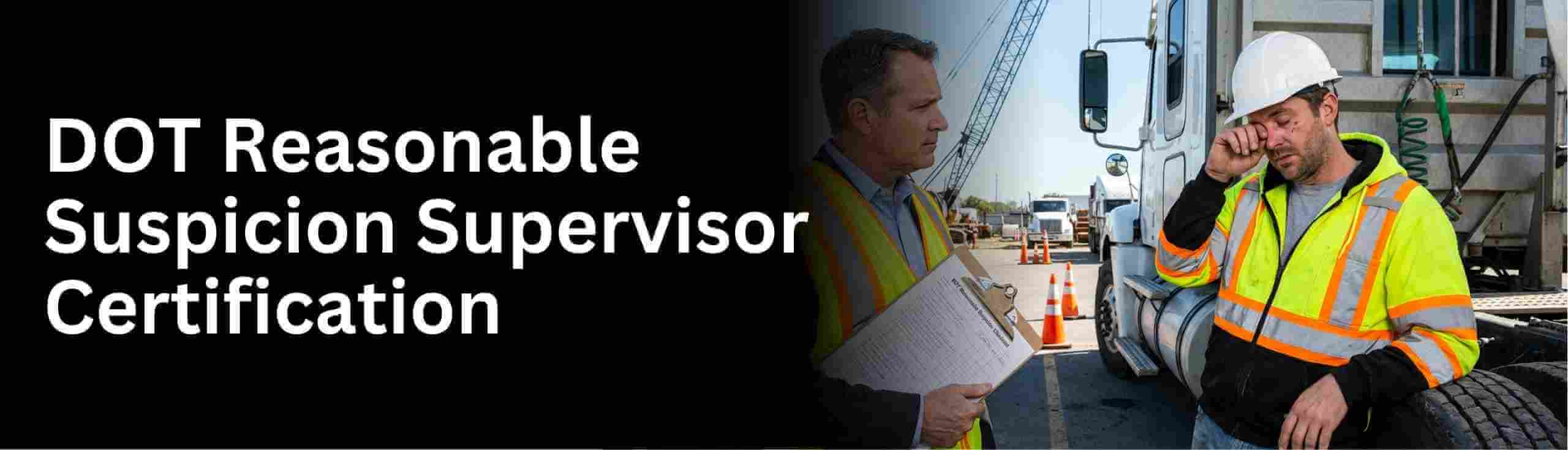
Drug and alcohol misuse in the workplace can place workers, employers, and the public at risk, especially in industries regulated by the Department of Transportation (DOT). Supervisors are responsible for taking action when signs of impairment appear and for following federal rules set by the Federal Motor Carrier Safety Administration (FMCSA).
To handle these situations correctly and meet FMCSA requirements, 60/60 Reasonable Suspicion Training provides supervisors with the knowledge needed to identify alcohol and drug misuse and respond in line with DOT regulations. The training covers observation, documentation, and compliance, guiding clear decision-making in safety-sensitive environments.
60/60 Reasonable Suspicion Training is a DOT-required program for supervisors and managers who oversee safety-sensitive employees. The training lasts two hours and is divided into:
This training requirement is outlined in 49 CFR Part 382 and enforced by the FMCSA. Supervisors must complete the training before making any reasonable suspicion determinations under DOT rules.
Reasonable Suspicion Training is required for supervisors and managers who oversee DOT-regulated, safety-sensitive employees, including:
Supervisors who have not completed 60/60 training are not authorized to make reasonable suspicion decisions under DOT regulations.
The 60/60 training helps supervisors understand substance misuse, recognize warning signs, and follow DOT and FMCSA regulations. It includes the following topics:
1. Drugs and Alcohol: The Facts About Substance Abuse:Reasonable Suspicion Training is required in industries where employee’s actions directly affect safety. This includes:
Reasonable Suspicion Training equips supervisors to identify signs of alcohol and drug misuse, follow DOT and FMCSA regulations, and handle workplace situations with confidence and accuracy. By carefully observing clear signs and behaviors and keeping proper documentation, supervisors help maintain safer work environments and protect both employees and the public.
Trusted by thousands of workers & supervisors